Why Does Bread Get Stale?

Most of us have experienced this perplexing daily dilemma: freshly baked bread is soft, fluffy and moist for the first few hours, but it becomes hard, crumbly and dry overnight, even if you keep it wrapped at room temperature. The majority of people think bread goes stale just because it loses water to the air, however the drying out of the surface is only a small factor that contributes to bread staling. This popular misconception results in incorrect storage practices that only accelerate spoilage and texture deterioration.
Scientists call bread staling retrogradation, and it is a change in the internal structure of bread starch that cannot be reversed, rather than a simple loss of water. It changes the inner texture, flavor and chewiness progressively, even in sealed containers. Having knowledge of the main bread staling processes allows us to increase the shelf life of bread without using chemical preservatives and to keep its original soft texture longer time.
In this article, we explain the internal and external factors that cause bread staling, highlight some deceptive storage myths and provide simple daily storage tips to keep your bread from getting hard in a normal home setting.
Why Bread Naturally Goes Stale
Bread is primarily made of wheat starch, gluten and water trapped in the air pockets. When bread is baked at a high temperature, starch molecules take in water and expand, resulting in the formation of loose, porous structures that produce the soft texture. Once the cooling phase is over, starch molecules undergo spontaneous molecular rearrangement, which is the main cause of the staling of bread.
Two overlapping factors cause the daily staling to speed up. First, internal water migration: moisture inside soft starch moves to rigid gluten networks instead of escaping externally. Second, starch recrystallization: ordered hot starch changes into tight ordered crystals which leads to the expulsion of bound water and the making of crumbs dense and stiff.
At room temperature with the range of 2°C to 21°C, starch retrogradation occurs the fastest. So, kitchen counter storage of bread is really the worst environment for leftover bread, going against what people normally think.
Five Key Factors That Speed Up Bread Staling
1. Room-Temperature Cooling and Slow Natural Resting
Slow cooling on open countertops triggers rapid initial staling. Within the first two hours after baking, bread releases residual baking heat continuously, and uneven internal temperature creates unbalanced moisture distribution across crumbs and crust.
The outer crust loses surface moisture quickly and turns tough, while inner crumbs trap excess damp heat. After four hours, moisture reversely transfers from crumbs to crust, resulting in hard inner texture and rubbery outer skin simultaneously.
2. Improper Refrigeration Storage
Putting unsealed bread directly into the refrigerator cold shelf is the biggest household mistake. Standard fridge temperatures (3°C-5°C) perfectly match the optimal range for starch recrystallization, doubling the staling speed compared with countertop storage.
Cold air also extracts residual water through microscopic packaging gaps. Refrigerated bread can turn stale in just 12 hours, while room-temperature bread takes nearly 24 hours to reach the same hardness level.
3. Low Humidity Indoor Air Circulation
Dry indoor air from air conditioners, heaters and winter ventilation accelerates surface water evaporation. Unlike internal retrogradation, dry-air staling mainly damages the bread crust first, causing cracking and brittle edges.
Cross ventilation amplifies water loss dramatically. Even sealed bread loses tiny water molecules through porous packaging films in dry environments, gradually losing softness and developing stale, bland flavor.
4.Low Fat and Low Sugar Bread Formulas
The plain white sandwich bread, sourdough, and baguettes go stale way quicker than sweet milk bread. Fats and sugars added to the bread production process interact with the molecules of the starch and delay the process of recrystallization very effectively. Unlike it, the formulas without butter, oil or sugar don’t have any fatty protective barriers for starch molecules. Sourdough, on top of that, has active organic acids that speed up starch rearrangement which means that it goes hard in less than half a day.
5. Cutting Bread Before Full Cooling
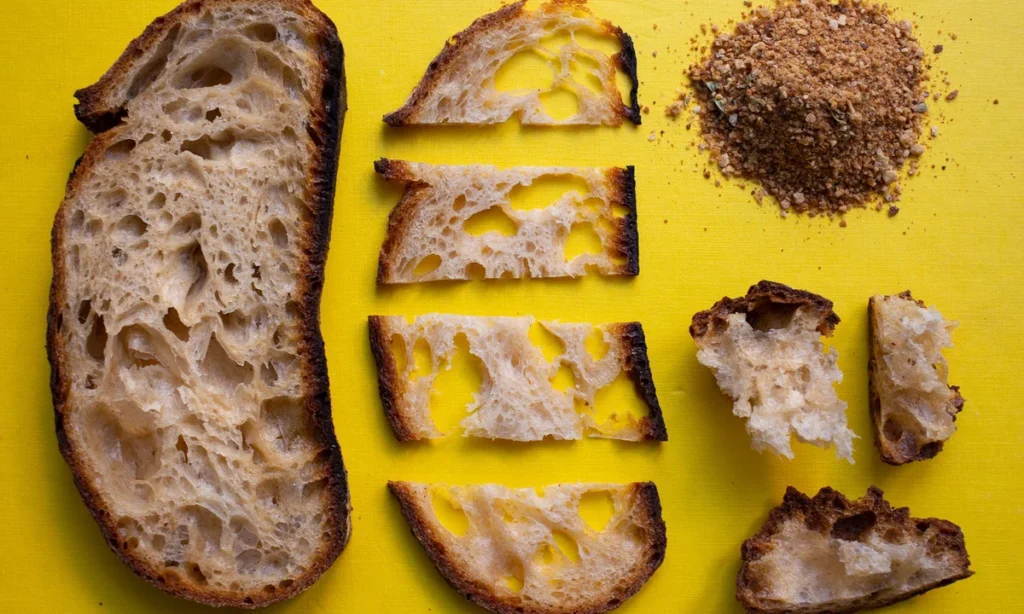
Cuts in warm bread cause the breakage of the internal moisture circulation that was intact. Besides, cutting bread results in new exposed surfaces which are 30 times more than the original one, so this greatly increases the water evaporation channels and at the same time, disrupts the gluten structural stability.
The sliced leftover bread will stale 30% more quickly than the whole unsliced ones. The edges of the cuts also get oxidized at a quick rate and give a stale cardboard-like flavor which completely spoils the original wheat flavor.
Misleading Bread Storage Habits to Avoid
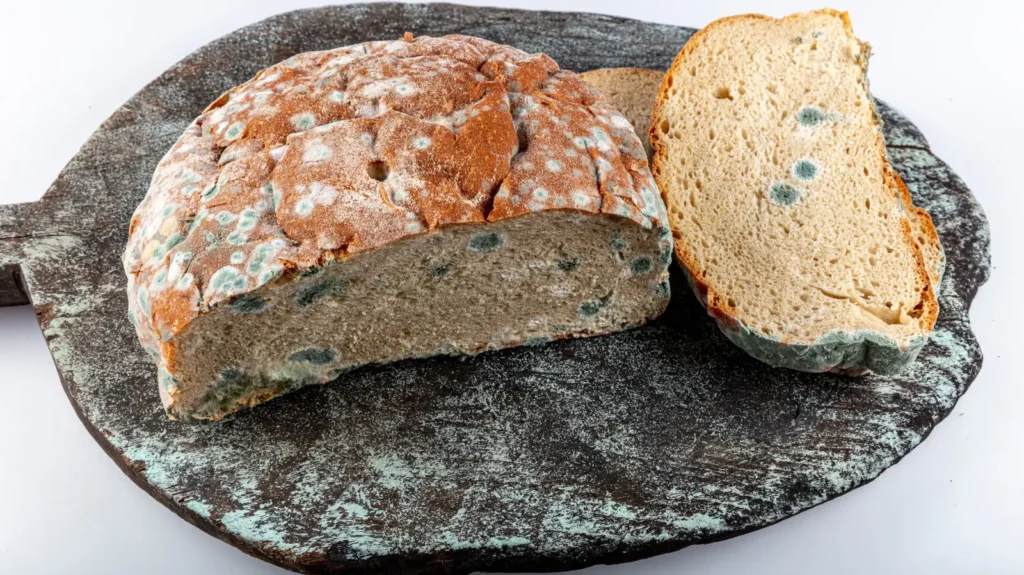
Loose plastic bag sealing is ineffective. Tiny air gaps allow continuous exchange of air, consequently, surface of the bread may dry and mold may appear inside at the same time if the weather is humid.
Microwaving stale bread for a long time only makes it get stale for good. In fact, when the bread is heated in the microwave too much the water contained in the starch gets completely evaporated so the bread becomes totally hard after cooling down and there is no way to get it back to normal.
Storing bread with fruits and vegetables makes the bread spoiled faster. Fruits and vegetables give off ethylene gas and also extra water vapor which help mold growth and cause an uneven distribution of moisture inside bread crumbs.
Handy Bread Staling Prevention Methods
Initially, ensure that bread is thoroughly cooled on wire racks instead of flat plates. The cracks of wire racks help to eliminate the damp heat at the bottom of the bread and at the same time, the internal moisture is balanced evenly.Next, place leftover bread in the freezer rather than the refrigerator. When frozen deep at -18°C, starch recrystallization is completely stopped, and moisture is stored for up to one month. Third, the best way to heat stale bread is to do it with steam, not just to microwave dryly. The steam action is the one that adds water back to the bread that is bound to it and is able to undo the slight starch retrogradation without causing additional hardening.In conclusion, do the slicing only just before eating and keep whole loaves in thick, airtight plastic bags to minimize the surface area exposed.
Conclusion
Bread staling relies on two core mechanisms: internal starch recrystallization and uneven moisture migration, not only surface drying. Fast cooling, cold refrigeration, dry air, lean formulas and premature slicing are the five top causes of rapid texture hardening.
Discarding wrong refrigeration and loose sealing habits stops accelerated staling. Freezing storage and steam reheating are the safest household methods to restore fluffy texture without additives.
By following targeted cooling, storage and reheating rules, households can keep bread soft and wheat-flavored for 3-5 days without chemical preservatives.