How Refrigerators Keep Food Fresh

Most people think of refrigerators only as devices that keep the food cold, so they do not consider the detailed freshness-preserving mechanism existing within. They believe that refrigerators completely kill harmful bacteria and that all foods can be stored randomly at any temperature. Such partial understanding results in improper use and invisible food spoilage inside refrigerators.
Refrigerators cannot kill food-borne bacteria completely. Their main function is to lower the surrounding temperature to reduce the microbial activity and the food-related biochemical changes. Many users tend to give too much credit to refrigeration and dismantle the internal cold circulation system, thus the food shelf-life may be reduced by almost half.
Herein, the article sheds light on the fundamental physical as well as microbial aspects of refrigeration preservation and illustrates five common wrong fridge usage habits, # ans # puts to rest three widely held misconceptions about fridges. It also reveals zero-cost ways to optimizing fridge fresh-keeping efficiency.
Main Guidelines of Keeping Food Fresh in a Refrigerator
Both food spoilage and deterioration are related to the activity of enzymes and bacteria. The bacteria that cause spoilage and grow at a comfortable temperature for humans (mesophilic) have their fastest growth in a temperature range from 20℃ to 35℃, during which they can divide every 20 minutes and break food protein quite rapidly.Standard household refrigerators usually keep the temperature stable at 0℃-4℃. Within this temperature range bacterial enzyme activity is inhibited and microbial reproduction speed is reduced by 92%, therefore food decay and odor production are delayed significantly.In addition to cooling, contemporary refrigerators can also control the level of humidity and air movement inside. Proper humidity level keeps food from drying out, and air movement helps get rid of the excess ethylene gas, which is the reason fruits and vegetables are ripening, and this also helps slow down their ripening at the same time.
Five Typical Wrong Fridge Usage Habits
1. Overstuffing Food to Fill Every Gap
Many users squeeze food tightly with no spare gaps. Cold air depends on inner circulating ducts to spread evenly across every shelf.
Overstocking blocks cold airflow completely. Local blind spots stay above 8℃ permanently, where spoilage bacteria keep growing actively and make surrounding food spoil within three days.
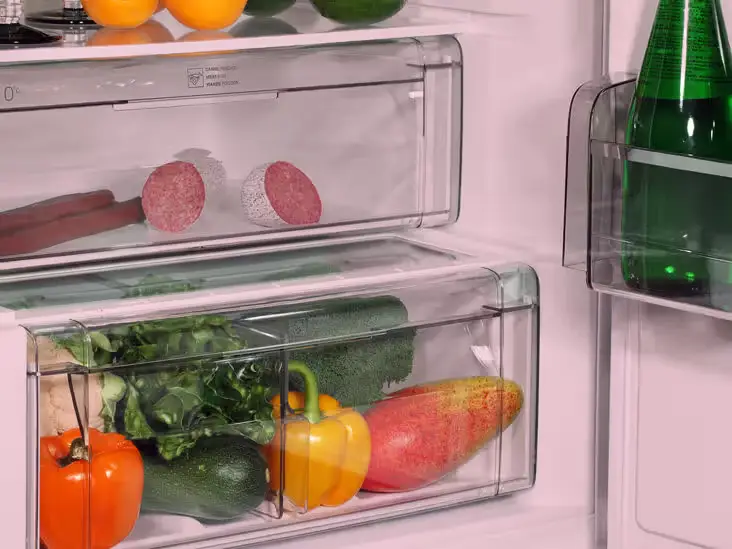
2. Leaving Fridge Doors Ajar Frequently
People often leave fridge doors half-open when taking ingredients casually. Warm humid outdoor air floods into the inner cavity in seconds.
Each 30-second door gap raises inner temperature by 2.3℃ and increases condensation. Frequent temperature fluctuation weakens long-term bacteriostatic effects and accelerates frost accumulation on inner walls.
3. Placing Hot Food Directly Inside
Hot leftovers carry massive residual heat and water vapor. Users put them into fridges directly to avoid room-temperature bacterial growth.
Residual heat raises the whole fridge temperature for over two hours. It increases compressor power consumption and creates high-temperature zones that pollute adjacent raw ingredients.
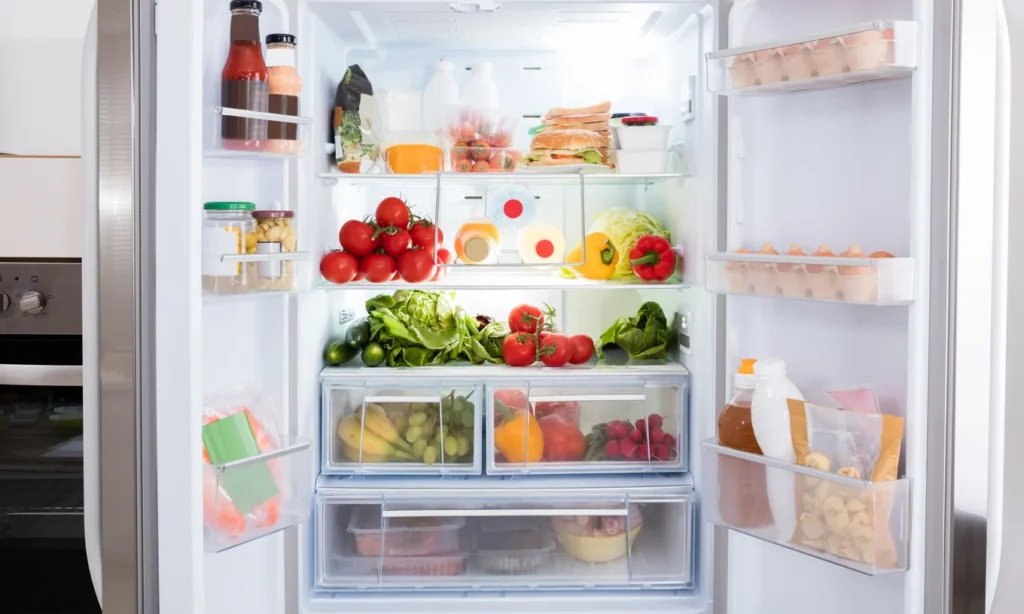
4.Covering the Inner Back Wall with Food
The inner back wall is essentially the major cold air outlet in a refrigerator. It requires being in direct contact with the air so it can continuously emit cold energy evenly.
When the back wall is blocked with milk cartons or vegetables, the cooling will be irregular. Foods in the covered parts will not be able to get to the standard 4℃, and mold will soon grow on those foods.
5. Neglecting Regular Interior Cleaning
When juices from food and little pieces of stuff fall down through shelf gaps, it is very easy to get organic residues that contain cold-resistant bacteria like listeria.
Biofilms are not removed by simple wiping. They implant, contaminate the freshly stored food, and cause cross-bacterial infection even at low temperatures.
Misleading Refrigerator Myths to Avoid
Lower temperatures indicate fresher food preservation.However, storage temperature below 0℃ can cause damage to the cells of fruits and vegetables which results in chilling injury that cannot be reversed.A fridge is a germ-free storage area.However, cold-tolerant bacteria not only survive, but even reproduce slowly inside a well-maintained fridge throughout the whole year.Odor removal means sterilization.Baking soda only neutralizes and absorbs the smells, it cannot kill the bacteria that cause spoilage and produce odors.
Science-backed Fridge Usage Tips
First, reserve 20% spare space inside the fridge. Guarantee smooth cold air circulation for uniform overall cooling.Second, cool hot food to room temperature within two hours before storage. Prevent overall temperature surges inside the cavity.Third, keep all food 5cm away from the back cooling wall. Protect core cooling outlets to maintain stable cold output.Finally, wipe inner shelves monthly with dilute salt water. Remove bacterial biofilms without damaging fridge inner materials.
Conclusion
Refrigerators do not directly sterilize but they keep food fresh by slowing down bacterial growth through cooling, maintaining the right humidity and circulating air inside. The five dangerous usage mistakes including overstocking, leaving the door open, storing hot food directly, blocking the walls and forgetting to clean. The fresh-keeping effects are influenced by three deceptive rumors about blindly lowering the temperature, having a sterile cognition and mixing odors with sterilization. By properly arranging food and cleaning daily, one can get the most out of a fridge and also increase food shelf life by more than 50% at home.