Why Do Onions Make You Cry?

Almost everyone has the experience of getting stung eyes and tearing uncontrollably when cutting onions. The onion’s strong and spicy smell is the main culprit of eye irritation for many people, but pure odor is not the direct cause. Even with closed eyes, most people cry when cutting fresh onions. This misconception results in ineffective coping methods that do not relieve eye discomfort.
Tearing from onions is a purely chemical protection mechanism and not an emotional one. The onions contain two separate compounds that are harmless in isolated cells. When the onion cells are broken during cutting, these substances are mixed and produce a gas that irritates the eyes. Knowing the chemical changes behind it can lead to solutions to stop eye watering without resorting to elaborate kitchen tools.
This piece presents the entire biochemical understanding of how onions cause tearing, identifies 5 daily factors that aggravate eye stinging, refutes popular but wrong remedies, and offers several zero-cost simple tricks that work to prevent tears while chopping onions.
The Central Biochemical Basis for Onion-induced Tears
An uncut, fresh onion holds two non-irritant substances that are separated in different types of cell organelles: sulfenic acid precursors and alliinase enzymes. In fact, when onion cells are whole, these two components never come into contact with each other.
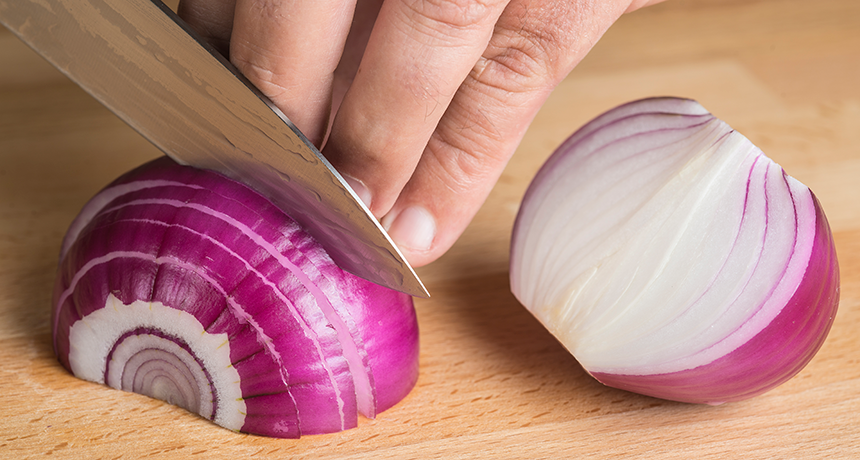
On the other hand, a sharp knife slicing damages millions of onion cells simultaneously and ruptures their internal membranes. Alliinase and sulfenic acid precursors come together and a quick chemical reaction occurs, producing a volatile syn-propanethial-S-oxide, also known as the lachrymatory factor (LF).
This light gas rises rapidly and is absorbed by the very thin water layer on the surface of the eyes. It works with the eye mucus to create a mild sulfuric acid that causes the stimulation of corneal nerve endings.
Five Key Factors That Make Onion Irritation Worse
1. Cutting Onions With Dull Blunt Knives
Blunt kitchen knives crush onion cell walls instead of cleanly slicing them. Rough squeezing destroys far more cells than sharp cutting, triggering massive simultaneous chemical reactions and releasing excessive tear-inducing gas in seconds.
Dull knives also create uneven onion fragments with larger exposed cross-sections. The expanded surface area accelerates gas volatilization, extending eye stinging time for 2-3 times compared with sharp knife slicing.
2. Room-Temperature Dry Cutting Environment
Dry indoor air speeds up gas diffusion dramatically. Low humidity evaporates onion surface moisture quickly, helping lachrymatory factor escape into the air without obstruction.
Indoor cross ventilation from fans or range hoods with strong airflow pushes irritating gas directly toward facial areas. Contrary to intuition, powerful ventilation worsens eye irritation by guiding gas straight to the eyes instead of dispersing it.
3. Cutting Onions Root-First
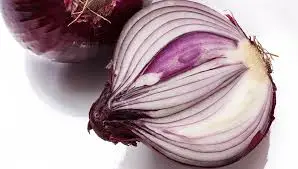
The onion root base contains 70% of alliinase enzymes in the whole bulb. The bulb body and top stem have far lower enzyme concentrations, so they produce minimal irritating gas when cut separately.
Slicing from the root end ruptures high-enzyme cells first, releasing concentrated lachrymatory factor at the start of cutting. Most home cooks follow this wrong cutting order unconsciously and suffer severe immediate eye pain.
4.Using Freshly Harvested Raw Onions
Summer onions just out of the ground contain a lot of water inside and their enzymes are still very active. They have about twice as much of the sulfenic acid precursor as cured winter storage onions.The latter, on the other hand, go through the process of losing some of their moisture and few redundant alliinase enzymes that are killed during storage, leading to 40% less production of tear gas and being less irritating to the eye, even if the cutting methods are the same.
5. Peeling and Cutting Onions Too Fast
If you peel and slice the onion continuously and rapidly, the irritating gas builds up around the eyes. When you cut slowly, the tiny amount of gas escapes into the air gradually, but when you cut quickly, it releases more gas than the air can naturally carry away.You keep your face within about 20 centimeters of the freshly cut onion, the zone with the highest concentration of the irritating gas, by keeping your hands very close together during rapid cutting, so the stimulation of the eye nerves is increased immediately.
False Onion-Cutting Solutions to Avoid
Chewing gum while cutting onions is not backed by science. While chewing gum keeps the jaw muscles busy, it will not be able to block the gas getting in contact with the eye corneas, and there is no evidence at all that is proves that it neutralizes the sulfur-based irritants.
Lighting candles next to the cutting board does nothing. Flames from candles only consume small particles of carbon-based odors and are incapable of reacting with or removing sulfur-based lachrymatory factor gas.
Standard eyeglasses provide only partial protection. The regular lens gaps allow the gas to flow upwards from the bottom and side edges, so the eyes’ mucous membranes will still be easily reached.
Real Life Zero-Cost Methods to Stop Crying
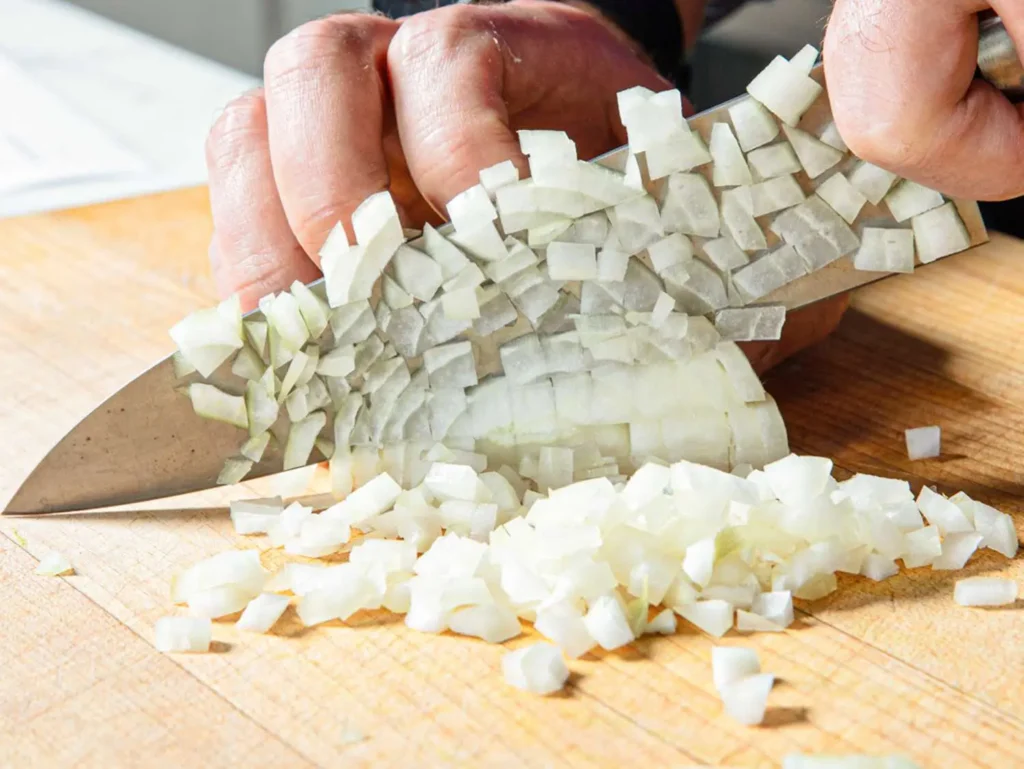
Firstly, go for super-sharp chef’s knives to get very accurate cutting. The sharp blades reduce the number of broken cells and also lessen the gas that causes eye irritation right at the source.Secondly, put onions in the fridge for 30 minutes before chopping. Coldness inhibits onion enzyme causing the release of the smelly gas quite a bit.Thirdly, cut the onion stalk first and hold the root until the last. The tip is to avoid bursting those root cells which have the highest enzyme level at the very beginning of cutting.Lastly, cut onions near the running tap water. The flowing water washes away the irritant gas that floats in the air before it comes up to your eyes.
Conclusion
Onions make people cry due to sulfur-based chemical reactions inside ruptured cells, not simple pungent odor. Blunt knives, dry air, root-first cutting, fresh onions and fast slicing are the five main triggers of severe eye irritation.
Discarding viral ineffective hacks like candle lighting and gum chewing eliminates wasted effort. Low-temperature chilling and sharp slicing are the most reliable household solutions.
By adjusting cutting tools, order and temperature, home cooks can avoid onion-induced eye stinging and watery eyes with no extra kitchen supplies.